Sulfuric acid is one of the most aggressive chemicals encountered by industrial enterprises, service stations, laboratories, treatment plants and production workshops. Conventional paints in such conditions quickly lose their protective properties and peel off. That is why more and more customers are looking for a chemically resistant paint, resistant to sulfuric acid, which actually works, has a uniform coating and color.
When choosing a chemical-resistant paint to sulfuric acid, it is important to consider the key characteristics of the material: is the paint suitable for concrete, is it an epoxy chemical-resistant paint, and does it provide reliable protection of concrete from sulfuric acid. Most often, such paints are sought by customers who have already had a negative experience using conventional paints and varnishes in an aggressive environment.
Typical problems you may encounter when choosing regular epoxy paint:
Therefore, it is important not to just buy paint, but to choose a truly chemically resistant coating that is designed specifically for contact with acids.
What paint really withstands the effects of sulfuric acid?
To protect surfaces exposed to sulfuric acid, two-component epoxy chemically resistant paints are used. It is the epoxy base that provides:
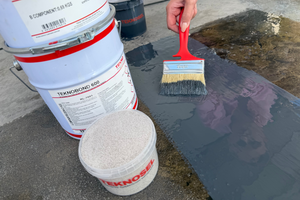
One such solution is Teknobond 610 .
Teknobond 610 — chemically resistant epoxy paint with high resistance to sulfuric acid
Teknobond 610 is a two-component epoxy chemically resistant paint specially designed to protect surfaces exposed to acids, alkalis, salts and industrial chemicals.

Advantages of Teknobond 610 :
That is why the epoxy chemically resistant paint Teknobond 610 is chosen to protect concrete surfaces in aggressive operating conditions .
The material is used as a paint for acidic environments, where conventional coatings quickly deteriorate, as well as a chemical-resistant paint for walls and floors at industrial facilities, in medical institutions and laboratories.
Where is Teknobond 610 sulfuric acid resistant paint used ?
Teknobond 610 is used where conventional paints cannot withstand:
At such facilities, chemically resistant paint is not a decorative solution, but a critically important protection of structures. The use of proven chemically resistant epoxy paint Teknobond 610 allows you to avoid repainting after 6–12 months, destruction of concrete and metal, additional repair costs and, as a result, equipment downtime. It also provides long-term protection of surfaces even under conditions of aggressive sulfuric acid.
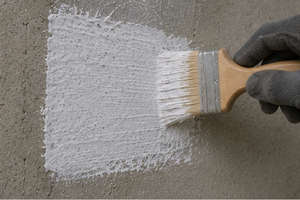
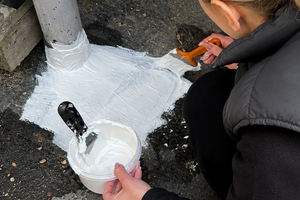
If you need a chemically resistant paint, resistant to sulfuric acid, that works in aggressive conditions, Teknobond 610 is a professional solution for painting concrete, metal, tiles (suitable for most smooth surfaces).
Chemically resistant epoxy paint Teknobond 610 provides reliable protection of surfaces against sulfuric, nitric, hydrochloric and lactic acids, as well as alkalis, aggressive chemicals and industrial detergents. This durable epoxy coating is chosen for premises where resistance to intensive chemical exposure and long-term operation of premises without destruction of the coating are important.