Concrete contact is a special adhesive primer used to prepare smooth, dense and low-absorbing surfaces before applying plaster, glue, putty and other building materials. In simple terms, concrete contact helps the next layer adhere better to the surface. It creates a rough adhesive layer, thanks to which the material more easily adheres to the substrate. Concrete contact becomes especially relevant when repairing concrete, ceramic tiles, glass, OSB, chipboard, drywall and other surfaces on which conventional finishing materials may have insufficient adhesion.
What is concrete contact in simple words?
Imagine a very smooth surface—for example, monolithic concrete or old glazed tiles.
If you apply plaster or other material to it without prior preparation, adhesion may be insufficient. The surface is too dense and smooth, so the material literally has nothing to cling to.
Concrete contact solves this problem.
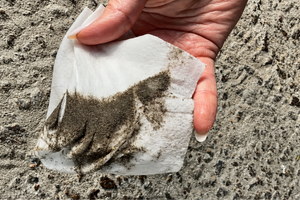
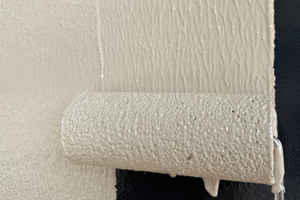
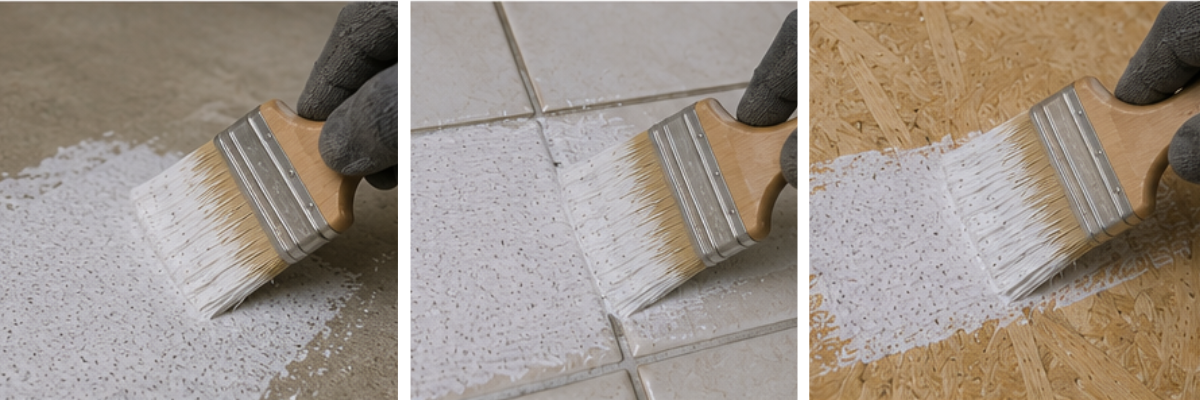
After application, it forms a special rough layer on the base. Such primers often contain quartz filler, which creates a microrelief.
Schematically, the principle of operation can be presented as follows:
Smooth surface → concrete contact → rough adhesive layer → application of the next material.
Therefore, the main purpose of concrete contact is to improve adhesion between the base and the next layer.
Why do you need concrete contact?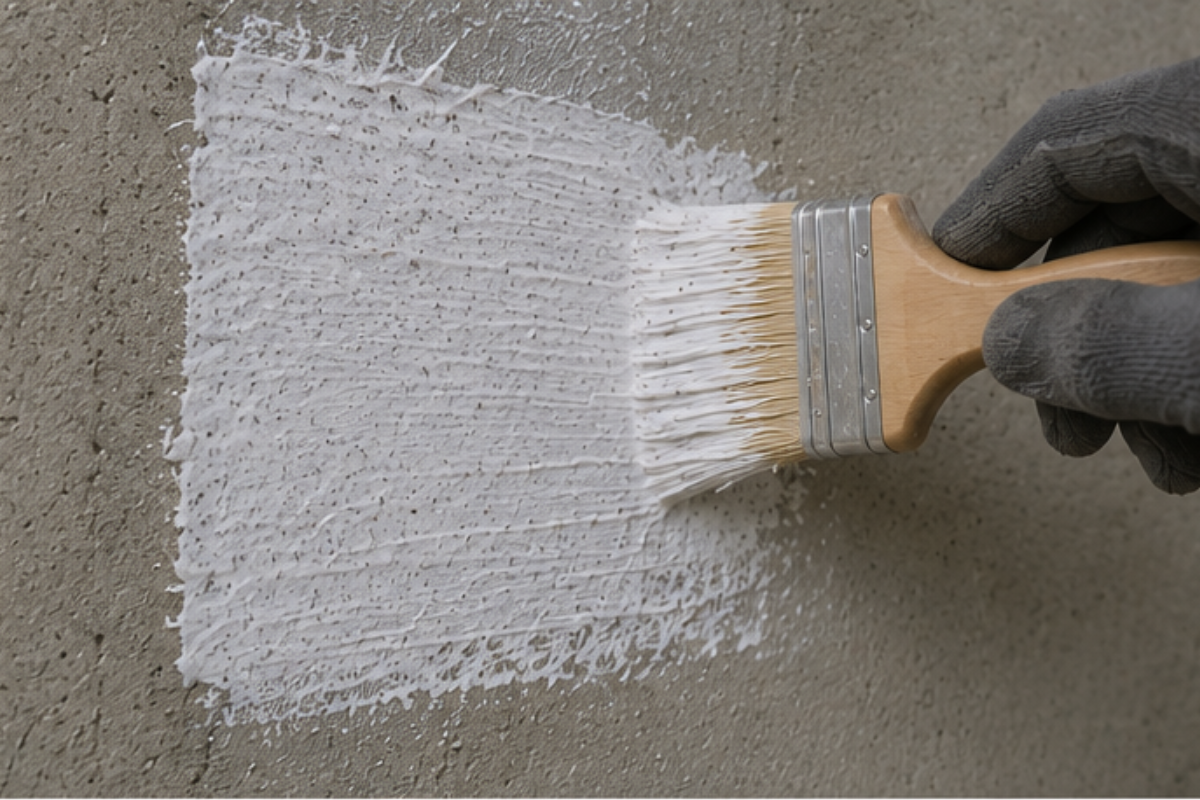
The main task of concrete contact is to prepare the surface for further construction or finishing work.
It is used when necessary:
-
increase the adhesion of plaster to smooth concrete;
-
prepare the base for tile adhesive;
-
perform repairs on top of old ceramic tiles;
-
prepare low-absorbing surfaces;
-
create a rough base for further finishing;
-
improve the adhesion of building mixtures to concrete;
-
prepare complex substrates before applying subsequent materials.
Concrete contact can be especially useful where it is difficult or impractical to completely remove the old coating.
Where is concrete contact used?
The name "concrete contact" may give the impression that it is intended exclusively for concrete. In fact, adhesive primers of this type can be used on a much wider range of substrates. For example:
Concrete
Smooth monolithic or precast concrete often has low absorption capacity. Before plastering and other finishing works, it can be prepared with an adhesion primer.
Ceramic tiles
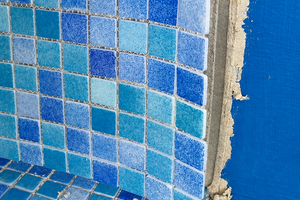
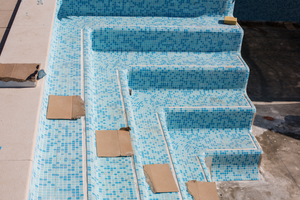
Concrete contact can be used to prepare old tiles if they are firmly attached to the substrate and have no defects.
This allows, in some cases, to perform new finishing without completely dismantling the old tiles.
Glass and glazed surfaces
Such materials practically do not absorb moisture and have a very smooth surface. That is why the issue of adhesion is especially important here.
OSB, particleboard, fiberboard
Adhesive primer can also be used to prepare some wood panels before subsequent application of finishing materials - provided that the specific materials are compatible.
Drywall
In appropriate systems, concrete contact can be used to create an adhesion layer before subsequent finishing.
Concrete contact under plaster: when is it needed?
One of the most common questions is: is concrete contact needed under plaster?
The answer depends on the basis.
If plaster needs to be applied to smooth concrete that does not absorb water well and has a low surface roughness, an adhesion primer can be very useful.
It creates an intermediate layer between the concrete and the plaster and helps provide the necessary adhesion.
However, on a rough and well-prepared base, concrete contact may not be necessary. Therefore, before use, it is necessary to assess the condition of the surface and the recommendations of the plaster manufacturer.
Can I apply concrete contact to tiles?
Yes, adhesive primers can be used to prepare ceramic and glazed tiles if the old tiles are firmly attached to the substrate.
This is one of the practical ways to prepare old cladding for further work.
But it is important to understand: concrete contact does not "glue" weak tiles to the wall.
If the old tile is peeling, wobbling, or has cavities underneath, you need to fix these problems first. There is no point in priming the base over a defective coating.
Can I use concrete contact on old tiles?
Yes, but only with proper preparation.
Before applying you need:
-
Check the strength of the old tile.
-
Remove items that are not holding well.
-
Clean the surface from dust, grease, dirt and other contaminants.
-
Wait for it to dry.
-
Apply adhesion primer.
-
After drying, carry out further work.
Thus, concrete contact allows you to prepare the surface for better adhesion of the following material.
Teknolatex 300 — acrylic primer with quartz filler
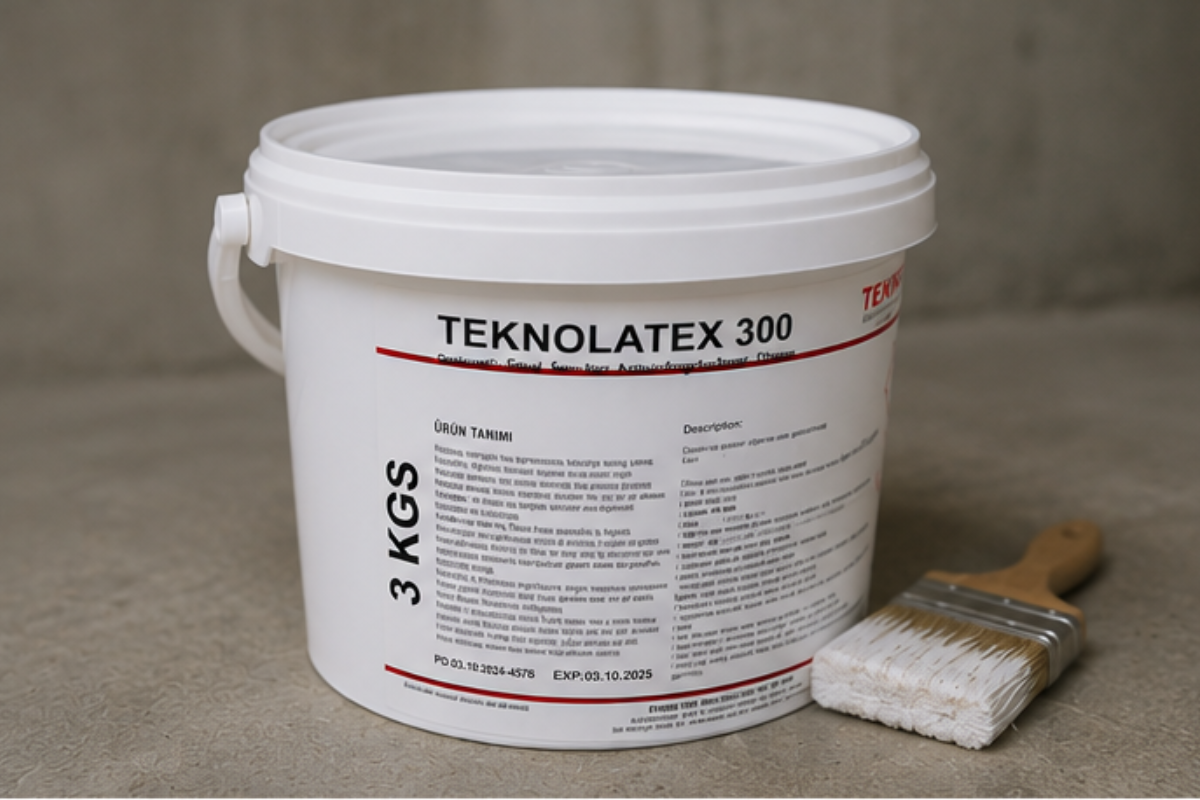 To prepare complex surfaces, you can use Teknolatex 300 , a one-component, high-viscosity acrylic primer with quartz sand.
Its main feature is the combination of an acrylic base and a mineral quartz filler, which helps create the necessary surface roughness.
Teknolatex 300 is designed to increase the adhesion of subsequent layers and can be used on various horizontal and vertical substrates.
Acrylic primer can be applied to concrete, glass, ceramics, glazed tiles, drywall, OSB, particleboard, fiberboard and other complex surfaces.
Why choose Teknolatex 300 acrylic primer ?
One of the practical advantages of Teknolatex 300 is that it is a ready-to-use material.
There is no need to mix two components, prepare the composition in a certain proportion, or perform complex calculations before application.
Mix the material thoroughly before use.
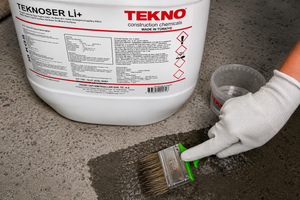
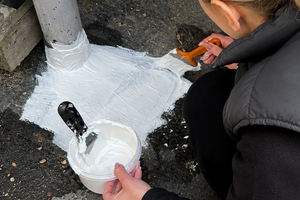
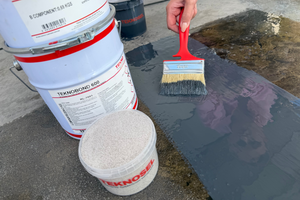
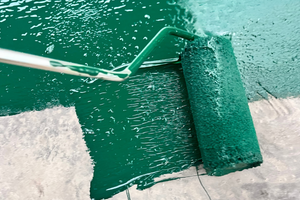
You can use a roller or brush for application.
That is, the master does not need to select complex equipment - the application method can be chosen depending on the area and conditions of the work.
The approximate consumption of Teknolatex 300 is 200–300 g/m² per layer, and the drying time is about 3–5 hours, depending on environmental conditions.
How to apply concrete contact correctly?
Proper surface preparation is no less important than the choice of material itself.
1. Clean the base
The surface must be solid and free of dust, dirt, grease, oils, remnants of old materials and other contaminants.
It is especially important to remove substances that can create a separating layer between the primer and the substrate.
2. Check the surface
Weak, peeling or unstable areas must be removed.
Concrete contact is designed to improve adhesion, not to strengthen a layer that is already peeling from the base.
3. Stir the material
Before applying Teknolatex 300, it must be mixed thoroughly so that the quartz filler is evenly distributed in the material.
4. Apply an even layer
You can use a roller or brush for application.
There is no need to apply an excessively thick layer. The goal is to form a uniform adhesive coating.
5. Wait for it to dry
Further work is carried out after the primer has dried.
For Teknolatex 300, the estimated drying time is 3–5 hours, depending on temperature, humidity and site conditions.
Typical mistakes when using concrete contact
Even good material cannot compensate for improper preparation of the base.
Applying to a dirty surface
Dust, grease, oil or other contaminants can prevent the primer from contacting the substrate.
Priming a peeling surface
If the concrete, plaster or tile has already lost its strength, you must first remove the problem areas.
Wrong choice of primer
Not every surface requires concrete contact. Other types of primers can be used for highly absorbent substrates.
Applying the next coat too soon
It is important to wait for the primer to dry according to the manufacturer's recommendations.
Ignoring material compatibility
Before starting work, you need to make sure that the concrete contact is compatible with the material that will be applied next.
Concrete contact or regular primer?
These materials perform different tasks.
A regular primer is mainly used to penetrate the substrate, strengthen the surface, and regulate its absorption.
Betonokontakt is primarily intended for creating an adhesive layer on smooth and low-absorbing surfaces.
Therefore, you should choose the material not according to the principle of "which primer is better", but based on the specific task.
If the surface is smooth, dense, and it is difficult for the subsequent material to provide reliable adhesion, it is worth considering an adhesive primer.
Is concrete contact always necessary?
No.
Concrete contact is not a universal material that needs to be applied to every surface before repair.
If the substrate has sufficient roughness, is well prepared and provides the necessary adhesion, an additional adhesion layer may not be necessary.
Its use is most justified when you need to solve a specific problem with adhesion.
FAQ: popular questions about concrete contact
What is concrete contact?
Betonokontakt is an adhesive primer that creates a rough layer on the surface and helps improve the adhesion of subsequent building materials to the base.
Why do you need concrete contact?
It is needed to prepare smooth, dense and low-absorbing surfaces before further finishing. It is used, in particular, before applying plaster, glue and other materials.
Can I apply concrete contact to tiles?
Yes, adhesive primers can be used on durable ceramic and glazed tiles. The surface must be thoroughly cleaned before application.
Can I use concrete contact under plaster?
Yes. Concrete contact is often used to prepare smooth concrete before plastering work, if required by the technology of a particular plastering system.
How long does concrete contact dry?
Drying time depends on the specific material and site conditions. For Teknolatex 300, the approximate drying time is 3–5 hours.
Do I need to dilute Teknolatex 300?
No. Teknolatex 300 is a one-component, ready-to-use material. It must be mixed thoroughly before use.
How to apply Teknolatex 300?
The material can be applied with a brush, roller, or roller.
On which surfaces can Teknolatex 300 be applied?
Teknolatex 300 can be used on concrete, glass, ceramics, glazed tiles, drywall, OSB, chipboard, fiberboard and other suitable substrates.