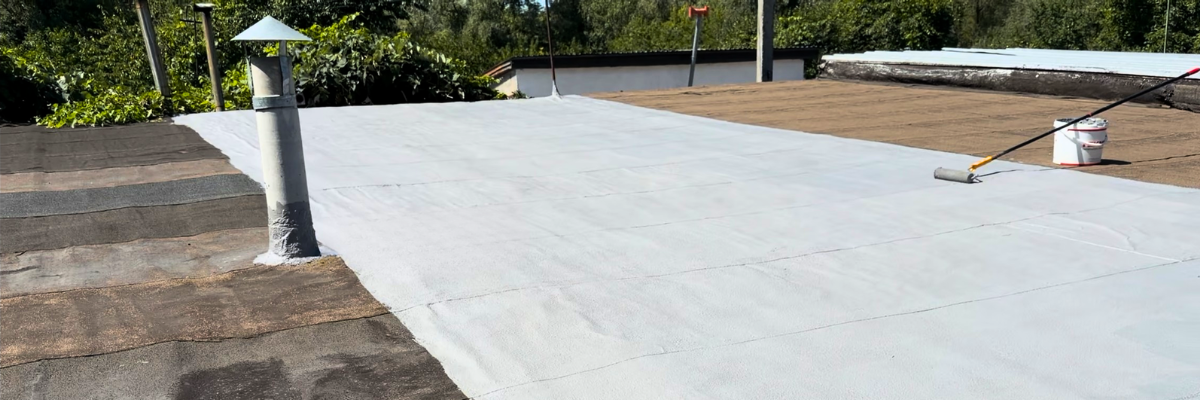
Is your old roofing felt leaking, have cracks appeared, the joints are letting water in, and after rain, wet spots appear on the ceiling? To repair an old flat roof, it is important not just to locally seal the leak, but to ensure reliable waterproofing of the entire surface.
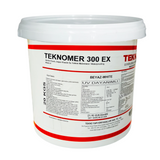
One of the solutions for waterproofing old roofing felt and bitumen roofs is Teknomer 300 EX - a ready-to-use acrylic waterproofing that forms a continuous, seamless waterproof membrane after application.
How to waterproof an old roofing felt roof?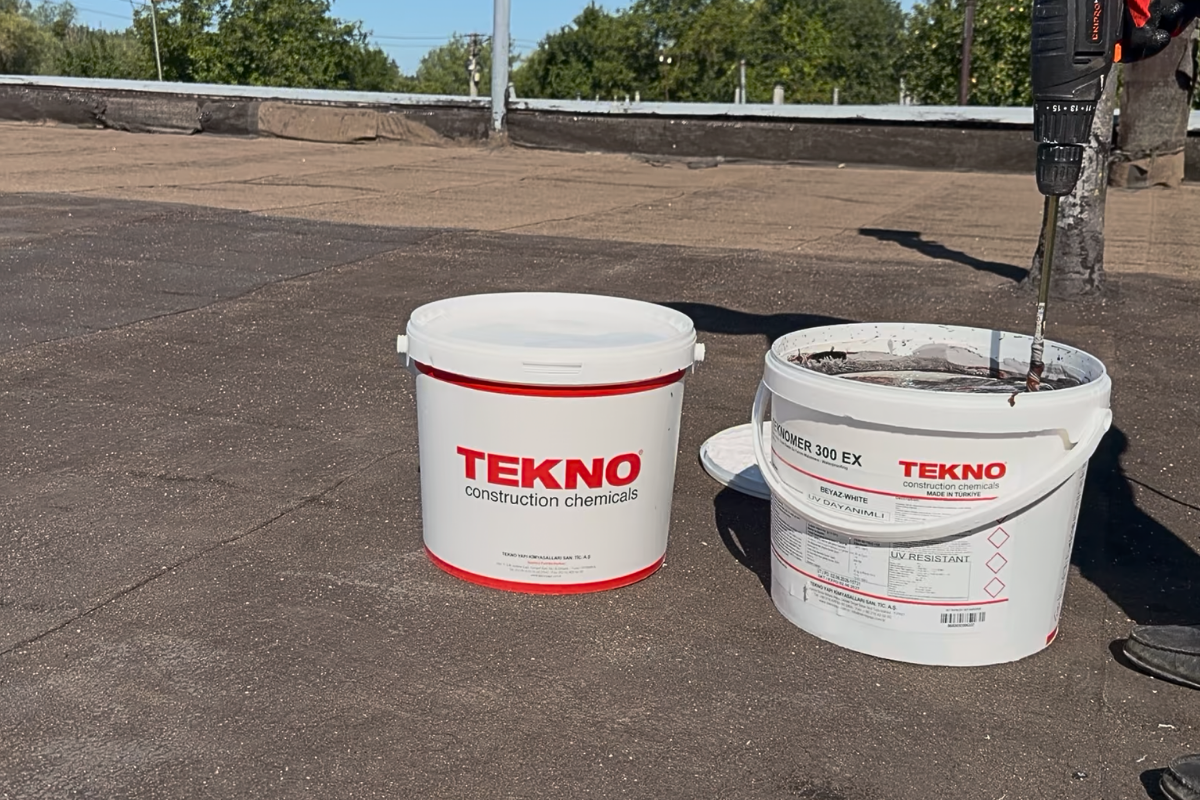
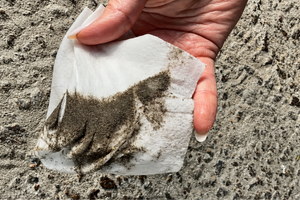
Before applying the waterproofing material, it is necessary to properly prepare the base. The old roofing felt must be cleaned of dust, dirt, debris, peeling and weak areas.
Particular attention should be paid to:
-
cracks in the old coating;
-
joints of roofing felt;
-
adjacency to parapets and other structures;
-
to places of previous leaks;
-
damaged and flaking areas;
-
areas where water may accumulate.
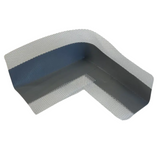
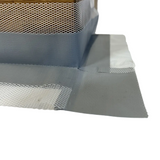
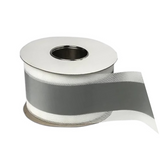
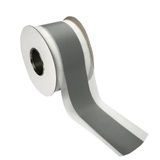
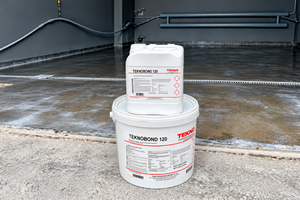
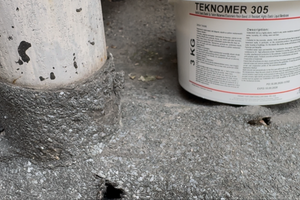
If the old roofing felt has lost its strength, is peeling off badly, or has significant damage, before applying a new waterproofing layer, it is necessary to perform appropriate repairs to the base and seal the seams and joints using Teknomer sealing tape.
Waterproofing roofing felt Teknomer 300 EX
To create a new protective layer, Teknomer 300 EX is used - acrylic waterproofing to protect surfaces from moisture penetration.
The material forms a seamless, elastic waterproofing coating that can be used for work on roofs and other structures exposed to atmospheric moisture.
One of the features of the material is its high elasticity, which allows the coating to work better when the base is deformed.
Teknomer 300 EX is resistant to ultraviolet radiation and weathering, which is especially important for open flat roofs.
How to apply Teknomer 300 EX on an old roofing felt?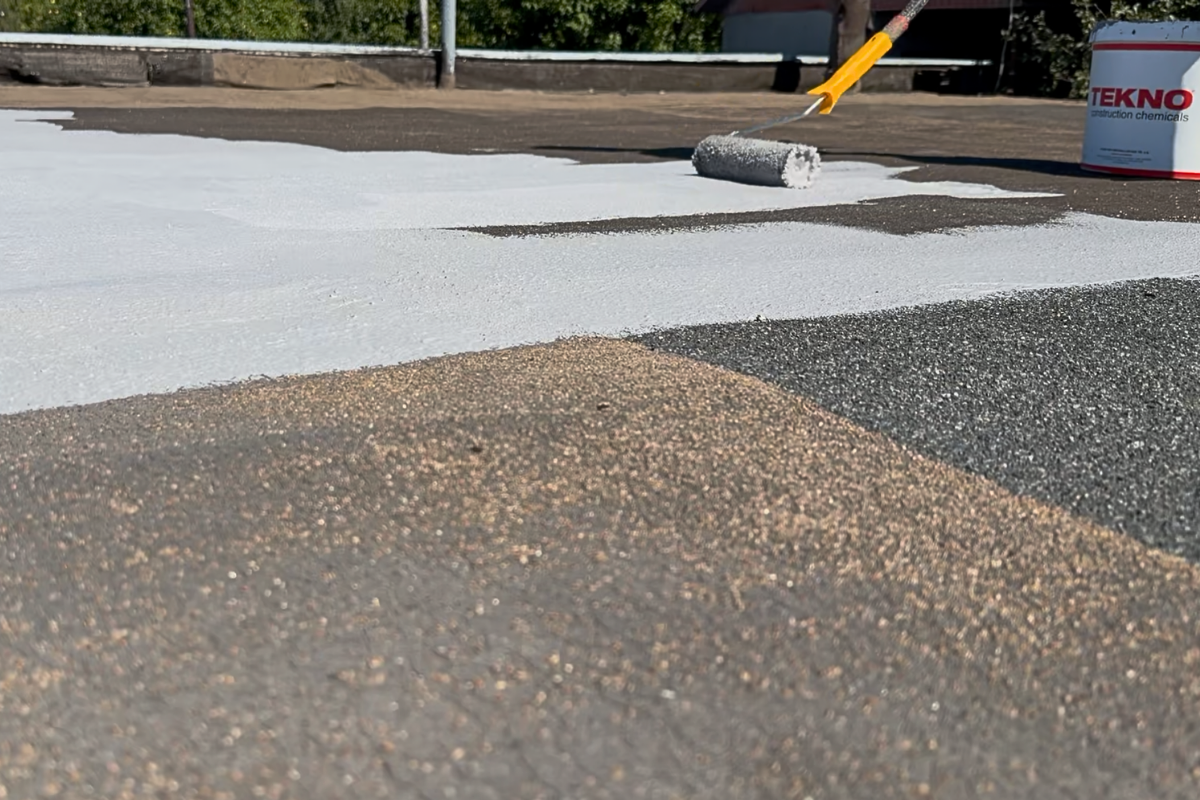
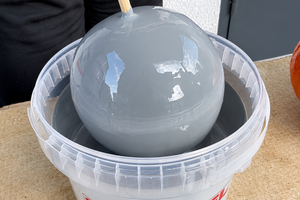
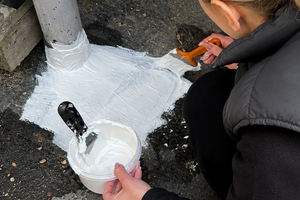
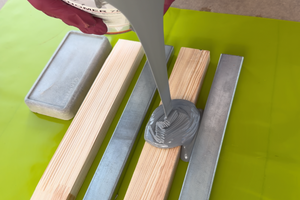
Teknomer 300 EX is supplied ready to use and is white in colour. If necessary, the material can be tinted with a suitable acrylic dye.
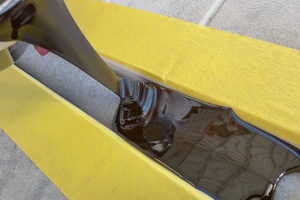
In our case, to obtain a gray shade, black and brown acrylic dye is added to the material. The mixture is thoroughly mixed until a uniform color is obtained.
After preparing the material, you can proceed to application.
First layer
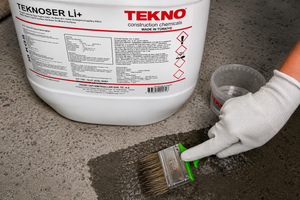
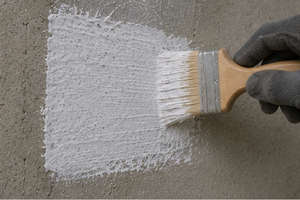
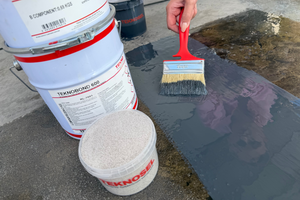
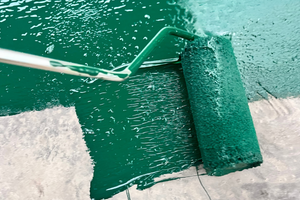
Teknomer 300 EX is applied evenly to the prepared roof surface.
It is important not to leave any untreated areas and to treat problem areas especially carefully - cracks, joints, junctions, and places of previous leaks.
Second layer
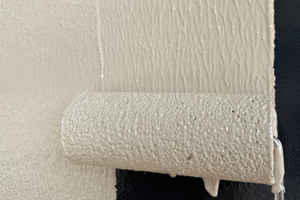
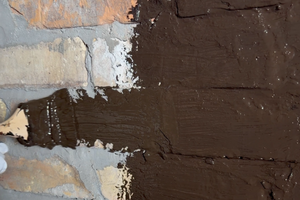
After the first layer has dried, a second layer of waterproofing is applied.
It is advisable to apply it perpendicular to the direction of the first layer to obtain a more uniform, continuous coating.
As a result, a seamless waterproofing layer is formed on the surface of the old roofing felt, which helps protect the base from the penetration of atmospheric moisture.
Is it possible to waterproof old roofing felt without dismantling it?
In many cases, repairs to an old flat roof can be performed without completely dismantling the existing roofing material.
But it depends on the condition of the base.
The old roofing felt must be strong enough, securely fastened and suitable for the application of a new waterproofing layer. Weak, peeling or severely damaged areas must be repaired or removed beforehand.
Therefore, before carrying out work, it is important to assess the actual condition of the roof.
Waterproofing a flat roof against leaks
Flat roof waterproofing should create a continuous protective layer over the entire surface. It is especially important not to limit yourself to repairing visible leaks.
Water can penetrate through cracks, joints, adjacencies, and other weak spots in the old coating, and then get under the roofing felt.
That is why a comprehensive approach — preparing the base, repairing damaged areas, and applying continuous waterproofing — allows you to create a more reliable protection system.
Why use Teknomer 300 EX?
Teknomer 300 EX is suitable for waterproofing work on various surfaces where it is necessary to create an elastic seamless coating.
Main features of the material:
-
ready to use;
-
acrylic base;
-
forms a seamless waterproof membrane;
-
high elasticity - up to 700%;
-
resistance to ultraviolet radiation;
-
resistance to weather influences;
-
possibility of tinting;
-
application in several layers;
-
possibility of use for waterproofing and protecting various roofing structures.
How to repair a roofing felt roof?
If an old roofing material is leaking, the general sequence of work may look like this:
1. Surface cleaning.
Remove dust, dirt, debris and weak areas of the old coating.
2. Check the base.
Identify cracks, joints, adjacencies, swelling and places of previous leaks.
3. Repair damaged areas.
Weak and peeling parts must be brought to proper condition.
4. Preparation of Teknomer 300 EX.
If necessary, the material can be tinted to the desired shade.
5. Apply the first layer.
Evenly cover the entire roof surface.
6. Applying the second layer.
After the first layer has dried, apply the second layer perpendicular to the previous one.
7. Coating control.
Make sure that there are no gaps or untreated areas on the surface.
In this way, it is possible to repair and waterproof an old flat roofing felt roof without completely dismantling the existing covering, if its technical condition allows such work to be performed.
If you need waterproofing for a flat roof, roofing felt or repairing an old roofing, pay attention to Teknomer 300 EX .