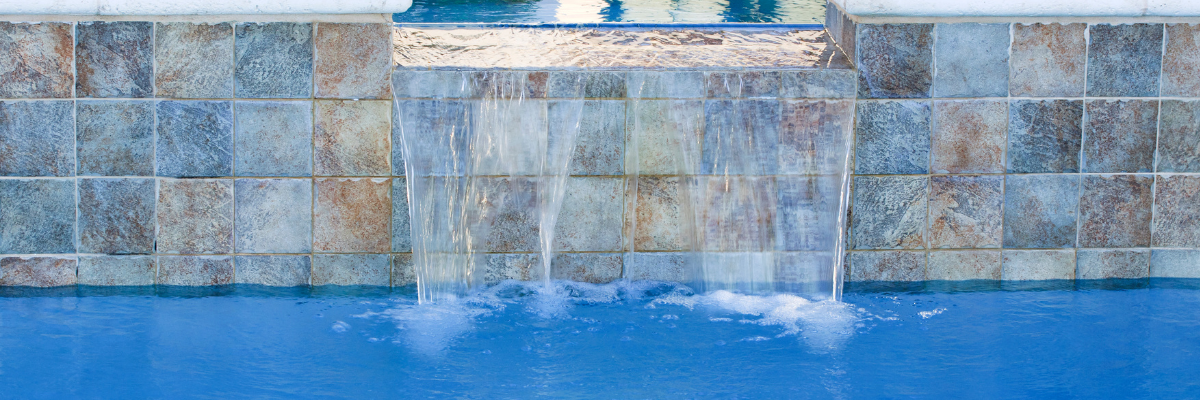
Waterproofing a swimming pool is one of the key stages of its construction and repair. Not only the tightness of the bowl, but also the durability of the concrete structure, tiles, seams, and decoration depend on the correct choice of waterproofing materials and application technology.
If your pool leaks, it is not always necessary to completely dismantle the cover and redo the entire bowl. In many cases, the cause of the leak can be eliminated locally or the waterproofing layer can be restored using special materials.
In this article, we will look at how to waterproof a swimming pool, what material to choose under the tiles, when elastic waterproofing is needed, how to seal seams and joints, and what to do if water passes through the tiles or seams.
Why does the pool start to leak?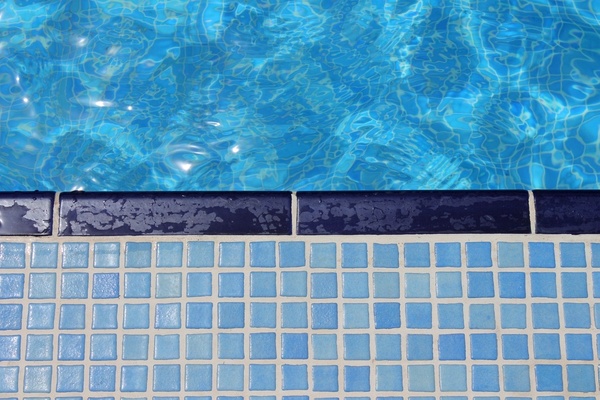
There may be several reasons why a pool loses its tightness:
That is why waterproofing a swimming pool under tiles should be considered as a comprehensive system. It is not enough to simply apply the material to the bowl area - special attention must be paid to seams, joints, corners, adjacencies and communication entries.
What kind of waterproofing is needed for a swimming pool?
The choice of material depends on the design of the pool, the condition of the base, the presence of a lining, and operating conditions.
Various materials and systems for waterproofing and sealing can be used to waterproof a swimming pool.
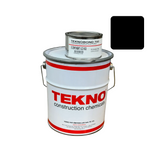
Teknomer 200 — waterproofing of the pool bowl under tiles
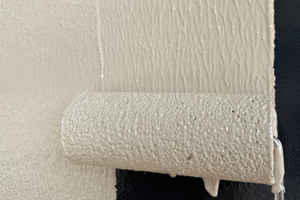
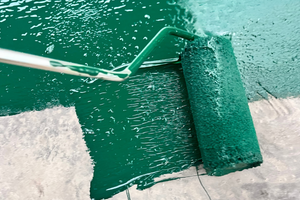
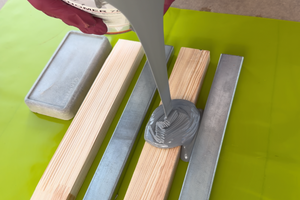
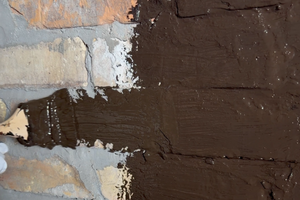
Teknomer 200 is a two-component cement-polymer-based waterproofing designed to create a waterproof protective layer on concrete and cement surfaces. The material is used to waterproof the pool bowl before laying tiles , creating a barrier that protects the structure from water penetration.
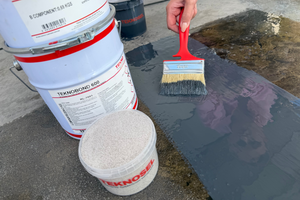
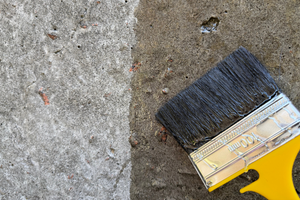
Teknomer 200 is applied directly to the prepared substrate and after forming a waterproofing layer can be covered with ceramic tiles or other finishing coating. This approach allows you to create a complete waterproofing system under the cladding and protect the concrete bowl from constant contact with water.
The material is suitable for waterproofing works in swimming pools, reservoirs and other structures where reliable protection against moisture is required. At the same time, when choosing a waterproofing, it is important to take into account possible deformations of the base. If the structure may be subject to movements or increased elasticity of the waterproofing layer is required, it is advisable to consider Teknomer 200 EX .
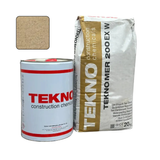
Teknomer 200 EX — when elastic waterproofing is needed
Teknomer 200 EX is a two-component polymer-cement elastic waterproofing designed to create a waterproof protective layer on concrete and cement surfaces. The material combines the properties of a cement base and polymer components, so that after application it forms an elastic waterproofing layer that is able to compensate for small movements and deformations of the base.
To waterproof a swimming pool bowl under tiles, Teknomer 200 EX is applied to a prepared concrete base, after which the waterproofing layer is covered with ceramic tiles or other facing material. This system allows you to protect the concrete structure from constant exposure to water and reduce the risk of leaks through microcracks or minor deformations of the base.
Thus, Teknomer 200 EX is a solution for those cases when waterproofing a swimming pool under tiles requires not just a waterproof, but an elastic protective layer that better adapts to small deformations of the base.
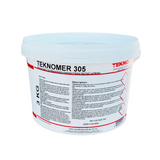
Teknomer 305, Teknomer 300 and Teknomer 300 EX
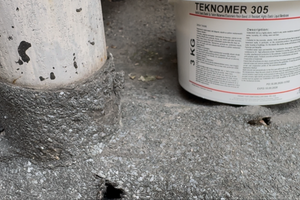
For waterproofing a swimming pool under tiles, you can also use elastic acrylic waterproofing materials on a water basis Teknomer 305 , Teknomer 300 and Teknomer 300 EX . Their important feature is a different level of elasticity: 200%, 300% and up to 700%, respectively. This allows you to choose the material depending on the design of the pool, the condition of the base and the expected deformations. The higher the requirements for the elasticity of the waterproofing layer, the more elastic the solution can be chosen for a specific object.
Therefore, the question "how to waterproof a swimming pool under tiles?" does not have one universal solution. When choosing a material, it is important to take into account the condition of the concrete bowl, possible deformations and cracking, structural components, operating conditions, and the type of subsequent decoration.
If the waterproofing will not be covered with tiles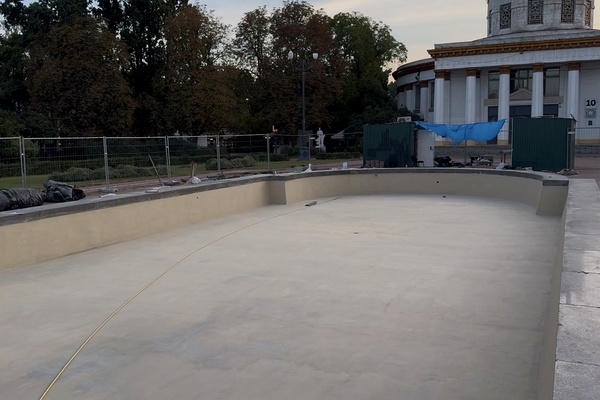
Not every pool needs to be tiled. In some cases, the waterproofing layer remains exposed and simultaneously acts as a finishing coating . In such a situation, it is important to use a material that is designed not only for constant contact with water, but also for the effects of solar radiation.
For such conditions, you can use Teknomer 200 EX-W - a two-component polymer-cement waterproofing for swimming pools with increased resistance to ultraviolet radiation . The material forms a waterproof protective layer that can remain open and does not require mandatory covering with tiles.
This is especially true for outdoor pools , where the waterproofing surface is constantly exposed to the sun, moisture and temperature changes. The use of UV-resistant material allows you to maintain the protective properties of the waterproofing layer during operation.
Therefore, when choosing a pool waterproofing, it is important to consider not only how well the material protects the structure from water, but also what will be on top of the waterproofing . If tiles are planned, a system for cladding is selected. If the waterproofing remains open, it is necessary to choose a material designed for such conditions, in particular Teknomer 200 EX-W .
The pool is leaking through the tiles or seams - what to do?
One common problem is when water starts to seep through the cladding, joints between tiles, or local damage.
In such a situation, it is not necessary to dismantle all the tiles at once.
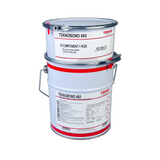
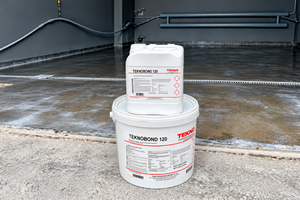
For waterproofing over tiles, you can use Teknobond 660 , a transparent polyurethane waterproofing.
It can be used where it is important to preserve the appearance of the existing surface and at the same time protect it from leaks, ultraviolet light, and environmental influences.
Therefore, if the question arises, "how to fix pool leaks through tiles?", you must first determine the source of the problem and the condition of the seams, cladding, and base.
Teknomer waterproofing tape for seams, joints and junctions
Even the best waterproofing of the pool area does not guarantee tightness if you ignore the places where the structures are connected to each other.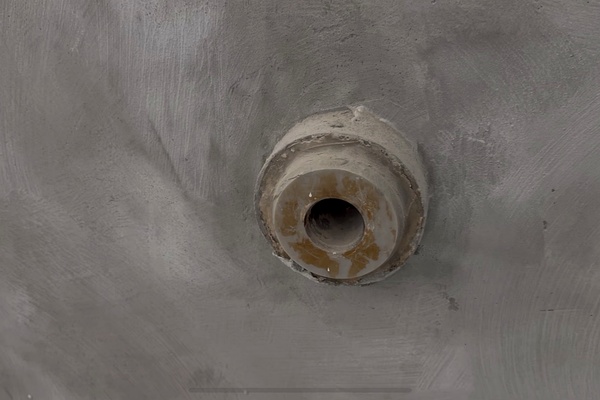
Particularly important are:
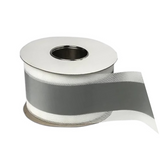
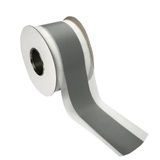
Teknomer sealing tape is used for such areas .
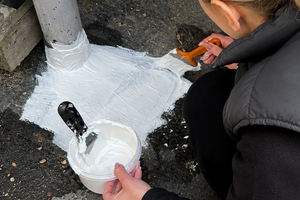
It is used as part of a waterproofing system to further strengthen problem areas. The tape is inserted into the waterproofing layer, then covered with the next layer of material.
This technology allows you to not just waterproof the area, but to form a comprehensive pool sealing system.
Teknomer 700 — superelastic waterproofing and sealing of the pool
For waterproofing a swimming pool, where high elasticity and reliable sealing are especially important, you can use Teknomer 700 - a seamless waterproofing material on an MS-polymer basis with an elasticity of 700%.
The main advantage of this solution is the ability of the waterproofing layer to withstand significant deformations of the base without losing its integrity. This is especially important for swimming pools, where the structure can undergo temperature and mechanical deformations, and the most vulnerable areas are joints, adjacencies, corners, seams and places where communications pass.
Teknomer 700 forms a continuous, seamless waterproof membrane, so it can be used to create a protective waterproofing layer on the surface of the structure and for additional protection of problem areas.
How to protect tile seams in a swimming pool?
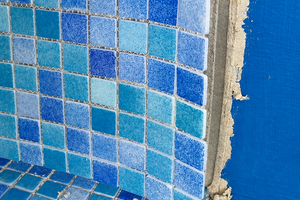
Even if the waterproofing of the pool under the tiles is done correctly, it is important not to neglect the joints between the tiles. They are constantly in contact with water, exposed to chemicals, ultraviolet light and temperature changes, so over time, ordinary cement grout can lose strength, fade, collapse or become a favorable environment for the formation of mold and fungus.
To fill tile joints in swimming pools, we recommend using Teknobond 700 , a two-component epoxy-based grout for tile joints with a width of 1 to 10 mm. The material has high resistance to chemicals and bacteria, as well as higher elasticity compared to conventional cement grouts.
One of the important advantages of Teknobond 700 is its color stability. The grout does not fade or deteriorate under the influence of UV radiation, which is especially important for outdoor pools. The smooth surface of the grout is easy to clean, and its properties help protect the joints from the formation of mold and fungus.
Therefore, a properly selected grout is not only about the aesthetic appearance of the tile. Teknobond 700 helps protect the joints between the tiles from water, chemical exposure, UV radiation and premature destruction, extending the service life of the pool lining.
How to properly waterproof a swimming pool?
1. Substrate preparation.
The concrete surface must be sound, free of dirt, dust, weak areas and other factors that may impair adhesion.
2. Check the bowl.
It is necessary to identify cracks, joints, adjacencies, communication entries and other potentially problematic areas.
3. Sealing of joints.
Corners, joints, adjacencies and communications entries are additionally sealed with Teknomer tape as part of the waterproofing system.
4. Applying the main waterproofing layer.
Depending on the design and subsequent finishing and operating conditions, a suitable waterproofing material is selected.
5. Choosing a finishing solution.
If the surface will be covered with tiles, a cladding system is used. If the waterproofing layer remains open, it is necessary to take into account the requirements for ultraviolet resistance.
6. Finishing the tiling and joints.
To protect the tile joints, it is imperative to use a professional joint grout, such as Teknobond 700 .
Can a pool that is already leaking be repaired?
Yes, but the repair method depends on the cause of the leak.
If the problem is in the concrete bowl or waterproofing layer, the corresponding section of the system must be restored.
If water passes through tile joints or the surface of the cladding, local sealing and the use of Teknobond 660 transparent waterproofing may be required .
If the problem occurs at the junction, adjacency, or entry of communications, it is necessary to strengthen this particular node using Teknomer sealing tape or Teknomer 700 ms-polymer waterproofing.
What pool waterproofing should I choose?
|
Situation |
Material |
|
Waterproofing a swimming pool under tiles |
|
|
Elastic waterproofing is required |
|
|
Waterproofing under tiles |
|
|
Open waterproofing with UV resistance |
|
|
Leaks through tiles or seams |
|
|
Seams, joints, adjacencies, communications entries |
|
|
Comprehensive professional solution |
|
|
Grouting pool tile seams |
Reliable waterproofing of a swimming pool is a comprehensive solution, not just applying one material to a concrete bowl.
To prevent the pool from leaking, it is necessary to properly waterproof the main area, seal joints, adjacencies, and communications, pay attention to tile seams, and choose the right material according to the operating conditions of the pool.
If the pool is already leaking, you must first determine the location and cause of the leak. Teknomer 200 , Teknomer 200 EX , Teknomer 300 , Teknomer 305 , Teknomer 300 EX , Teknomer 200 EX-W , Teknobond 660 , Teknomer waterproofing tape , Teknomer 700 and Teknobond 700 can be used for different situations.