Sealing of expansion, deformation and construction joints using Teknomer sealing tape and Teknobond 400 D adhesive
Sealing joints is an important stage of any repair and finishing work. High-quality sealing of expansion, deformation and working joints allows you to protect the walls of the object from the formation of moisture and ice, the formation of which is associated with the "dew point".
Professional sealing of seams will significantly reduce the heat loss of the building, prevent the appearance of fungus on the walls, and as a result, you will get rid of leaks, unpleasant odors, and dampness inside the premises.
How to seal seams yourself?
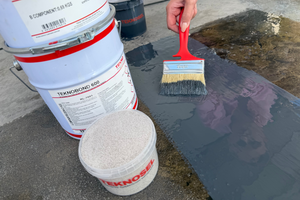
Next, we will tell you how to properly perform professional seam sealing using Teknomer tape and TEKNOBOND 405 D glue, or reinforced TEKNOBOND 400 D glue.
With our materials, you can easily seal structural, expansion and construction seams yourself.
Surface preparation before sealing joints
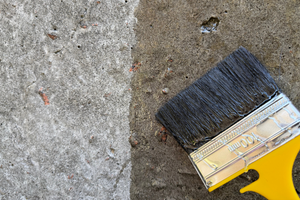
First of all, make sure that the application surface is properly prepared. It must be dry and clean.
If there are any damages or weak concrete parts on the surface, they must be removed and then repaired using Teknogrout or Teknorep repair mixtures.
The concrete base must be strong and have sufficient compressive strength (minimum 25 N/mm2) and a tear strength of at least 1.5 N/mm2.
Technology for sealing seams
Preparing the glue. Which glue to choose for sealing joints?
We have two types of glue for professional sealing of joints - Teknobond 405 D and reinforced glue Teknobond 400 D. Next, let's look at how they differ:
| TEKNOBOND 405 D | TEKNOBOND 400 D |
| Compressive strength 45 N/mm2 | Compressive strength 60 N/mm2 |
| Bending strength 20 N/mm2 | Bending strength 20 N/mm2 |
| Adhesion to the surface (peel) 3 MPA | Adhesion to the surface (peel) 3 MPA |
| Density 1.9 kg/l | Density 1.64 kg/l |
| Consumption (approximately) 1 kg per linear meter of tape | Consumption (approximately) 1 kg per linear meter of tape |
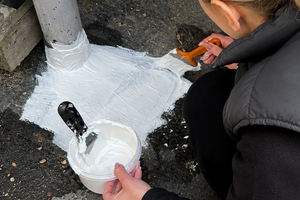
How to properly prepare glue for sealing seams?
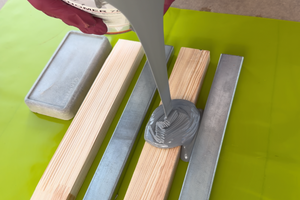
Teknobond glue is a two-component material.
Teknomer thermoplastic tape bonding
Important!
To eliminate the loss of elasticity of the tape, it is recommended to lay it not under tension, but with a margin of sagging along the seam. It is not necessary to apply glue to the middle of the tape. This part must remain elastic.
The seam sealing system is used for:
Why choose TEKNOBOND 405 D | 400 D glue?
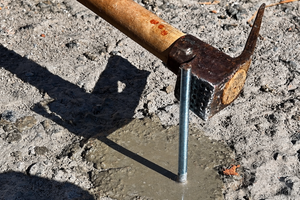
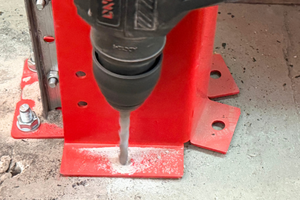
Anchoring reinforcing bars
If we use Teknobond 400 D glue to anchor reinforcing bars, we pay attention to the following:
We suggest you watch a detailed video review of our materials, where we showed how you can independently seal expansion, deformation and construction joints:
Sealing of expansion, deformation and construction joints using Teknomer tape and Teknobond 405 D | 400 D glue is a reliable way to protect structures from moisture, leaks and mechanical damage. Due to the high adhesion, water resistance and strength of the materials, this system provides long-lasting and effective sealing even in difficult operating conditions.
Due to the ease of application and the possibility of independent use, this technology is the optimal solution for both professional construction and private repair work. Using the right materials and adhering to the installation technology, you can significantly increase the durability of building structures and avoid problems associated with moisture and joint destruction.
For additional information and the correct selection of material, call: +38 (067) 486 42 41