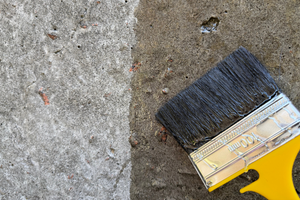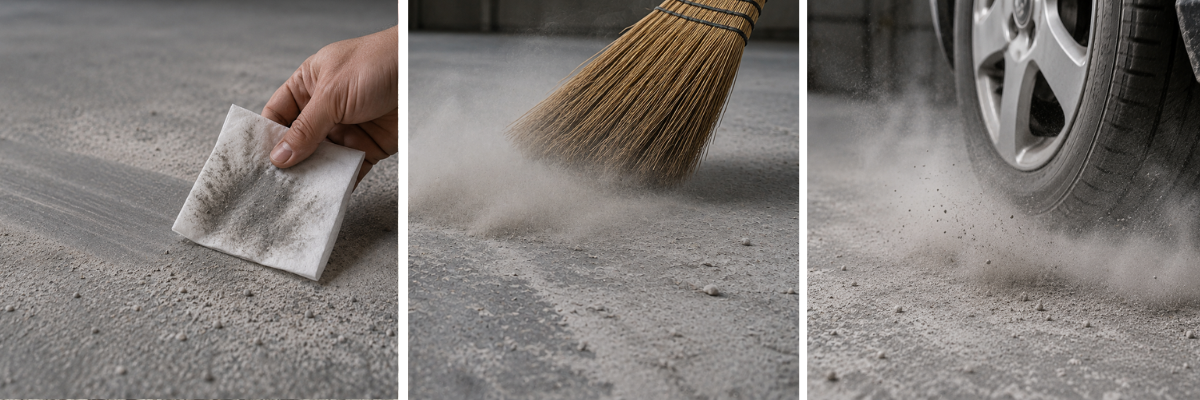
A concrete floor seems strong only at first glance. During operation, its top layer gradually wears away: the surface begins to dust, scuffs appear, the concrete absorbs water, and with constant mechanical stress, the destruction continues.
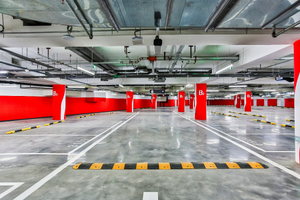
This is especially noticeable in garages, warehouses, production facilities, parking lots, and other places where people regularly walk on concrete floors, equipment drives, or cargo is moved.
Therefore, the question "how to strengthen a concrete floor and remove dust?" is not only a matter of appearance. Properly selected impregnation allows you to increase the hardness of the surface layer, reduce water absorption, reduce dust formation, and increase the resistance of concrete to abrasion.
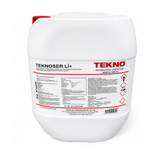
For this task, you can use liquid silicate hardeners Teknoser Sodyum and Teknoser Lityum . Both materials do not work as a paint or film coating, but penetrate into the pores of the cement base.
Why does a concrete floor start to dust?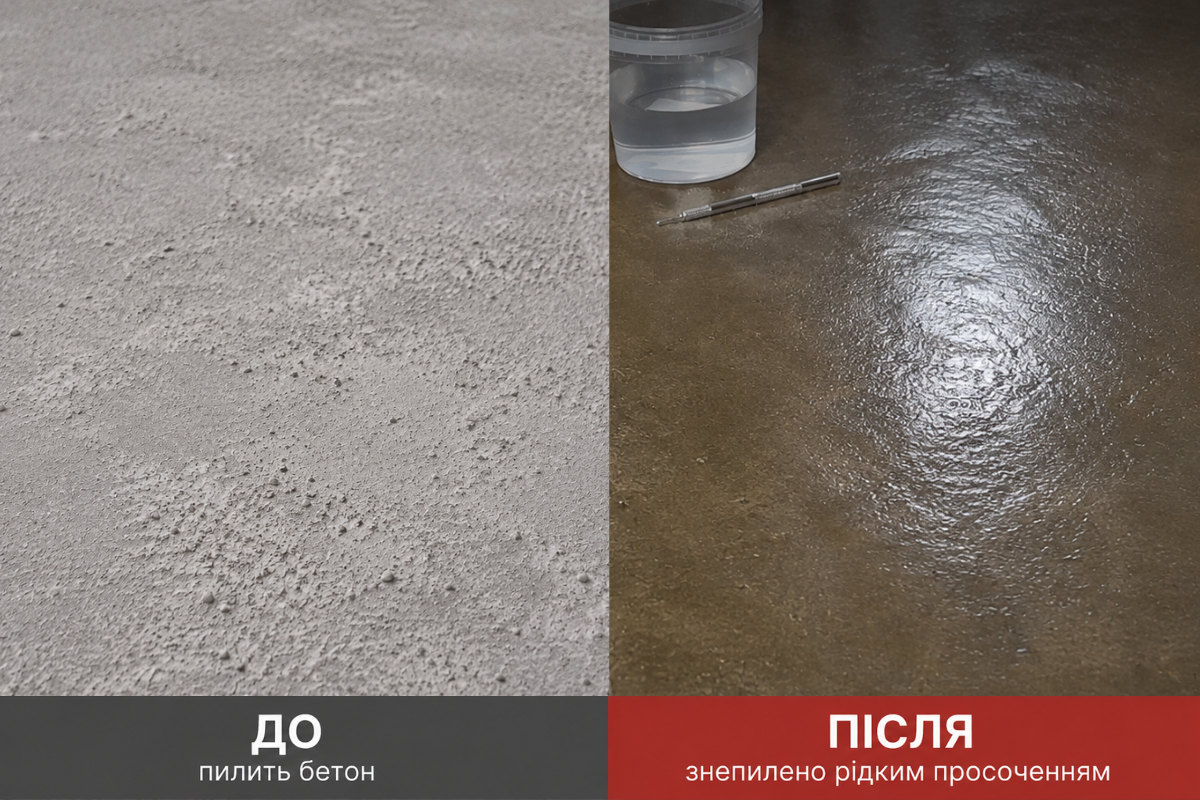
Concrete has a porous structure and if there are systematic loads and the surface itself is not protected in any way, the top layer of concrete begins to collapse.
As a result, typical problems arise:
-
the concrete floor is constantly dusty;
-
the surface wears out faster;
-
water absorption increases;
-
abrasions and traces of use appear;
-
with intensive use, surface destruction accelerates;
-
the room is more difficult to keep clean.
That's why simply removing dust is not enough. You need to work with the concrete surface itself.
How does liquid concrete hardener work?
Teknoser Sodyum and Teknoser Lityum have low viscosity and penetrate concrete or cement screed.
After the material penetrates the pores, insoluble crystals form. The surface structure becomes dense, dust formation is reduced, and hardness and abrasion resistance are increased.
Teknoser Sodyum — concrete strengthening and dedusting
Teknoser Sodyum is a liquid surface hardener based on sodium silicate. It is used as a means for concrete care and dust prevention.
The material is designed for permanent reinforcement of cement surfaces. The manufacturer recommends it for production and warehouse premises, cold storage rooms, open and closed parking lots, hangars, helipads and docks.
After application:
-
water absorption decreases;
-
hardness increases;
-
dust formation is reduced;
-
increased resistance to abrasion;
-
the surface becomes denser;
-
the passage of water vapor is maintained.
Teknoser Lityum - when you need to increase the wear resistance of the surface
Teknoser Lityum is a liquid hardener based on lithium silicate with low viscosity.
The principle of operation is similar: the material penetrates concrete or cement screed and forms insoluble crystals inside the pores. This allows to increase the hardness of the surface, reduce water absorption, dust formation and wear.
The manufacturer recommends Teknoser Lityum for production and storage areas, cold storage rooms, open and closed parking lots, hangars, helipads and docks.
A separate advantage of lithium silicate is its use in concrete surface reinforcement systems, where density, wear resistance, and reduced water absorption are important.
Teknoser Sodyum or Teknoser Lityum - what to choose?
Both materials solve one main task: to strengthen the mineral surface and reduce its dusting.
But the choice must be made depending on the requirements for the object.
|
Basis |
Sodium silicate |
Lithium silicate |
|
Main task |
Dust removal and strengthening |
Enhanced reinforcement and sealing |
|
What is changing? |
Dusting is reduced, the top layer is compacted |
Increased hardness and wear resistance |
|
Why is it particularly relevant? |
Old, porous, dusty concrete floors |
Floors with increased wear resistance requirements |
|
Additional effect |
Surface sealing |
Reducing water absorption and increasing durability |
So what material to choose?
If the main task is to dedust concrete, increase surface hardness, and obtain an economical solution for a large area, you can consider Teknoser Sodyum .
If the facility has increased requirements for surface operation and a lithium silicate-based solution is needed, Teknoser Lityum is worth considering .
It is important to understand that both materials are not intended to repair deep cracks, potholes, or significantly damaged concrete. If the concrete has already lost its integrity, the defects must first be repaired, and only then the surface should be strengthened.
How to properly reinforce a concrete floor?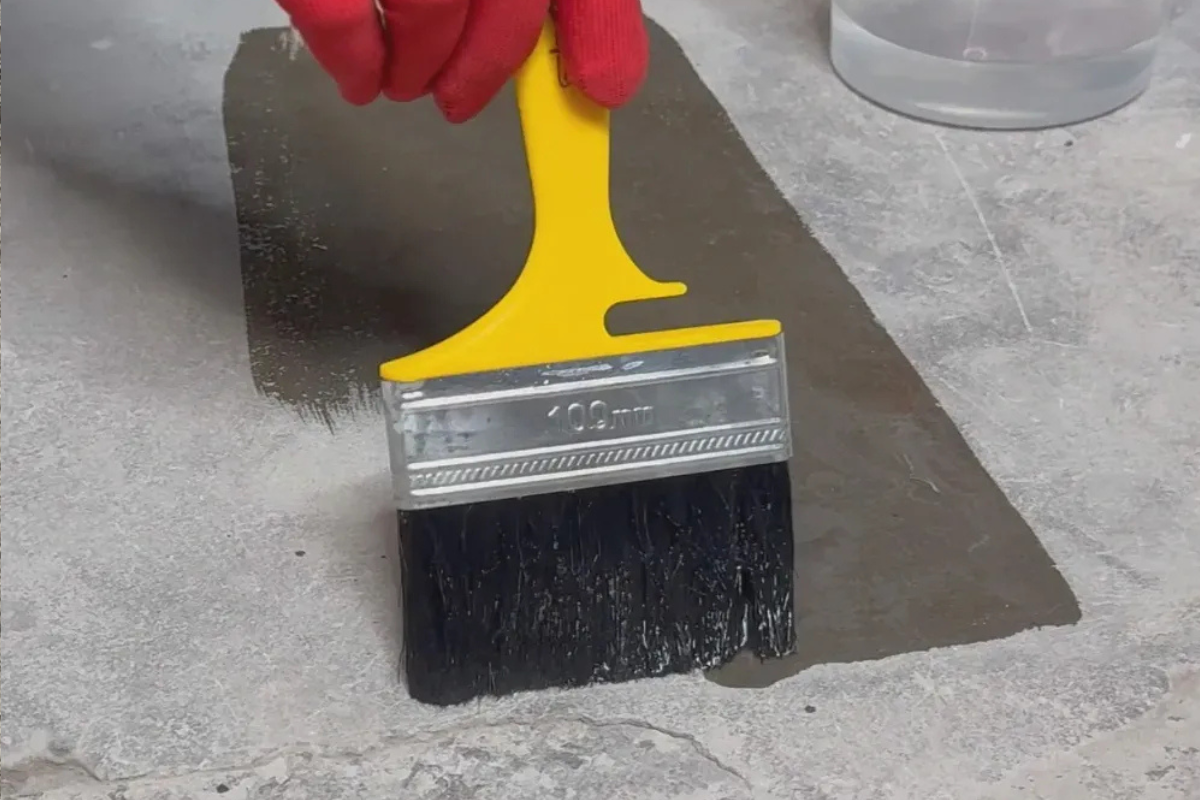
The quality of the result depends not only on the material.
The base must be strong, clean of dust, oils, paint, tire marks and other contaminants that prevent the penetration of the impregnation.
For both materials, the manufacturer specifies the minimum concrete quality as C20/25 , and for cement screed, EN 13813 CT-C25-F4 .
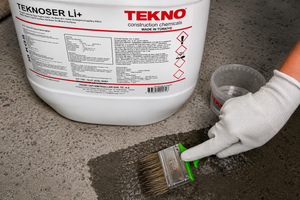
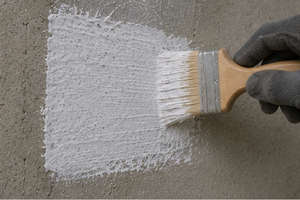
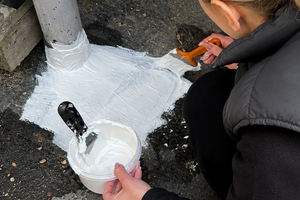
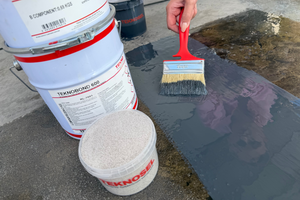
The material is applied evenly so that it fills the pores of the surface, and then distributed with a thin brush or rubber squeegee. In this case, puddles and accumulation of material on the surface must not be allowed.
After application, the surface remains mineral - the material does not create a separate film on top, like paint.
What if the concrete is already very dusty?
It is important to correctly assess the condition of the foundation.
If the concrete simply has a weak surface layer and is dusty, a liquid silicate hardener may be the right solution.
But if the surface is already severely damaged, crumbling, has deep defects, cracks or potholes, impregnation alone will not be enough.
In this case, the system should look something like this:
cleaning → repair of defects → surface preparation → strengthening → polishing or applying a finishing coating if necessary.
That is, Teknoser is not a "magic tool that repairs any concrete", but a material for strengthening and dedusting a suitable mineral base.
Conclusion
If a concrete floor has started to collect dust, wear out quickly, and absorb water, it is not necessary to immediately cover it with paint or another thick-layer coating.
In many cases, the problem can be solved by deep impregnation with a silicate hardener.
Teknoser Sodyum - when the main problem is dust and a weak top layer.
Teknoser Lityum - when increased hardness, wear resistance and durability of the concrete surface are required.
Both materials can be used for concrete floors in warehouses, production facilities, parking lots, and other facilities with mechanical loads.
So, if you just need to strengthen the surface and eliminate the problem of dusting - Teknoser Sodyum . If the concrete floor needs to be given higher hardness and resistance to intensive use - it is worth considering Teknoser Lityum .