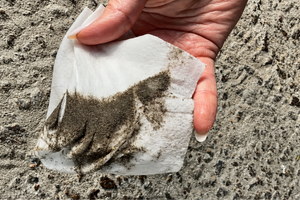
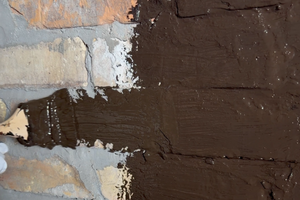
Water destroys concrete even when it is not visible to the naked eye. It penetrates into micropores, capillaries and microcracks, gradually destroying and reducing the strength of the structure.
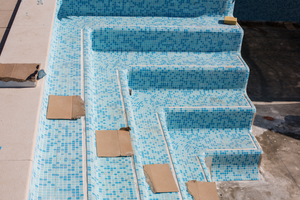
Basements, wells, water tanks, swimming pools, dams, water mains, tunnels and other infrastructure structures constantly operate in conditions of high humidity or direct water pressure. It is for such objects that it is critically important to make proper, long-lasting waterproofing.
Teknomer 100 is a penetrating waterproofing for concrete based on special cements and active chemical additives. After application, the material penetrates deeply into the concrete structure, filling pores and capillaries, blocking the path of water forever.
The key advantage of Teknomer 100 is its resistance to positive and negative water pressure up to 7 Bar. This means that the material works effectively both from the side of direct contact with water and when water presses on the concrete from the outside - for example, in basements, buried structures or mines.
That is why Teknomer 100 is chosen for complex, critical and hydraulic facilities, where an error in waterproofing is unacceptable.
When to use penetrating waterproofing
Teknomer 100 penetrating waterproofing is used for:
How to use penetrating waterproofing correctly
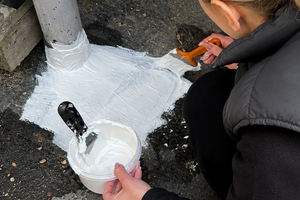
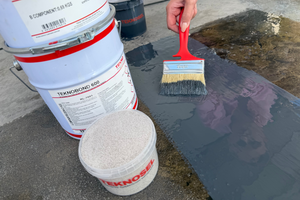
Applying Teknomer 100 penetrating waterproofing
Before applying Teknomer 100 penetrating waterproofing, it is important to moisten the surface thoroughly.
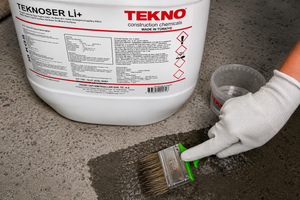
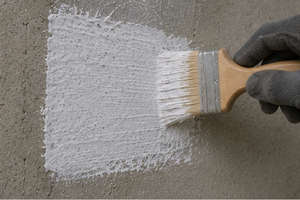
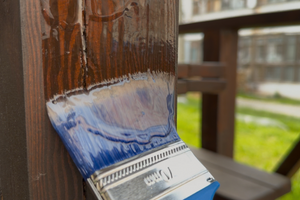
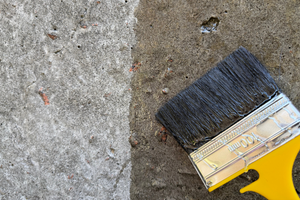
Teknomer 100 can be applied by brush or spray in 2-3 layers. Each subsequent layer of waterproofing is applied perpendicular to the previous one.
Reliable waterproofing is the basis for the durability of concrete structures. If moisture has access to the concrete body, destruction becomes only a matter of time, regardless of the thickness or strength of the structure. That is why for objects with constant exposure to water and moisture, it is important to use solutions that work not on the surface, but deep inside.
Penetrating waterproofing Teknomer 100 allows you to protect the surface comprehensively: it stops capillary suction, closes concrete pores, minimizes the risk of cracking and maintains the load-bearing capacity of the structure even in difficult operating conditions. This approach is especially relevant for underground, hydraulic and infrastructure facilities, where repairs after commissioning are technically difficult and economically unjustified.
The use of system solutions and adherence to application technology ensures a stable, long-lasting result without the need for constant repairs.