


|
Quantity
|
Total
|
||
|
|
|||
|
|
|||
InnoElast glue is a universal one-component adhesive for sealing horizontal and vertical joints in concrete structures. It is used for sealing construction joints in building structures, sealing expansion joints, sealing joints and holes for through pipes in the wall, sealing cracks and damage, sealing and sealing joints in industrial floors, sealing and sealing joints in windows and niches.
Properties:
- One-component glue and sealant
- Does not require the use of primer
- Can be applied even on wet surfaces
- Application at temperatures from -3°C on surfaces cleared of ice
- For repairing and sealing defects
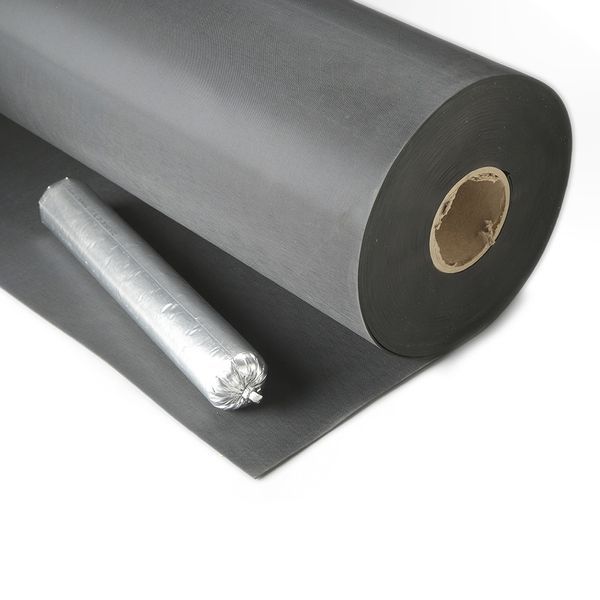
- Adhesive for the ProElast® system
Surface preparation:
The surface must be solid and stable, free from dust, grease, oils and other materials that impair adhesion. The surface may be damp, but must not be wet and have a visible film of moisture. Suitable for application to concrete and other mineral building materials, as well as plasterboard, wood, metal, PVC, ceramics, bitumen, etc.; in case of doubt, we recommend conducting preliminary tests.
Application:
InnoElast® is applied directly to the surface using a squeeze gun. For suitable surfaces, a primer is not required.
When sealing joints, it is necessary to maintain a sufficient width (≥ 5 mm) and depth (≥ 10 mm and ≥ ½ width) of the joint. To avoid 3-sided adhesion to the base of the joint, it is necessary to lay a suitable filling cord or a strip of polyethylene in the joint. It is recommended to tape the edges of the joint with adhesive tape. When filling the joint with the sealant, avoid the formation of voids and bubbles. Ensure good adhesion to the sides of the joint by pressing and smoothing. Use clean liquid soaps (not diluted with water), such as dishwashing detergent, as a smoothing agent. Remove the adhesive tape immediately after smoothing. The maximum thickness of the material applied in one operation should not exceed 5 cm.
When used as an adhesive, InnoElast® is applied evenly to the surface to be bonded and spread with a notched trowel in a layer 1 to 2 mm thick. To avoid voids and bubbles in the joint, the sealant must be pressed firmly onto its surface. Bonding a large surface with InnoElast® requires a moisture-permeable substrate. For impermeable surfaces, we recommend using FlächenElast® adhesive and sealant with artificial hardener.
For a tight adhesion of ProElast® film, follow the application instructions in the “ProElast® System” data sheet. In case of doubt during surface preparation and application, we recommend conducting a preliminary test.
Subsequent processing: InnoElast® sealant must be protected from moisture
until a stable surface film has formed . If a subsequent paint coating is planned, we recommend carrying out your own tests due to the wide variety of possible coating systems. InnoElast® type 2 is suitable for paint application in accordance with DIN 52452, part 4. Consumption and minimum joint dimensions: When sealing joints in accordance with DIN 18540 , sufficient width (≥ 5 mm) and depth (≥ 10 mm and ≥ ½ width) of the joint must be observed. Consumption: 1 ml/cm³ Volume [ml/m]=w×d× ;100 (in cm)
Instructions for use:
InnoElast® sealant is moisture-curing, i.e. high temperatures or high absolute humidity of the ambient air accelerate the curing process (
thereby reducing the open time
of the sealant), while low temperatures slow it down.
Preheating the material at temperatures
below +5°C facilitates application.
Hardened residues can be removed mechanically using a scraper or spatula.
Consistency: pasty
Color: gray
Odor: none
Specific gravity: 1.6 g/cm3
Density: approx. 25 (Shore Type A)
Max. deformation: 25%
Film formation: approx. 2 - 3 hours
Curing speed: approx. 2 mm/24 hours
Temperature regime during laying: -3 C - +40 C (concrete body temperature)
Temperature resistance: from -40 to +110 C / with short-term exposure up to +220°C
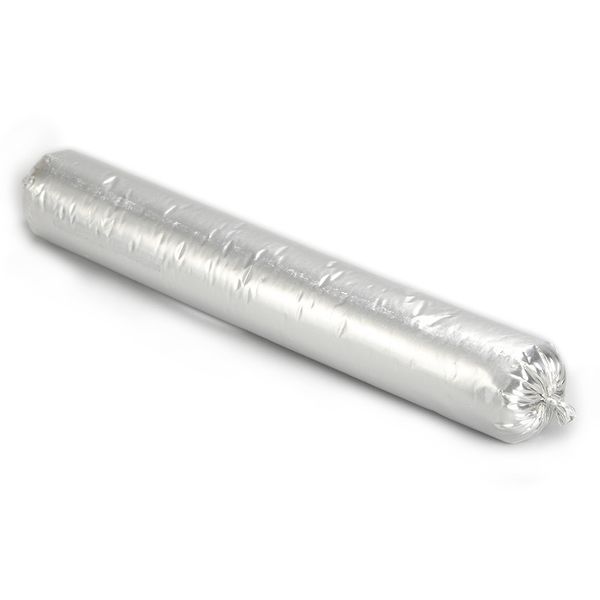
Packaging: in tubes of 600 ml (900 g)
Storage: in a cool and dry place, in original packaging for up to 12 months