



|
Quantity
|
Total
|
||
|
|
|||
|
|
|||
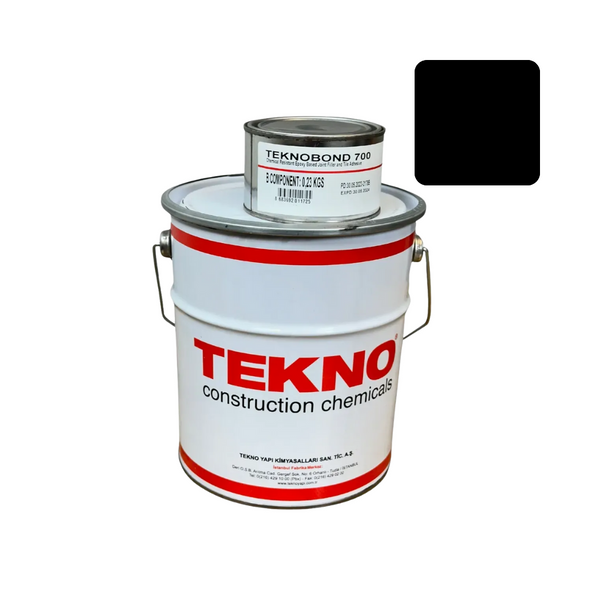
Teknobond 700 is a two-component epoxy resin-based grout for filling tile joints with a width of 1 to 10 mm, resistant to chemicals and bacteria.
Areas of use:
- can be used as an adhesive for laying glass mosaics and tiles
- when performing internal and external cladding
- heated floors
- kitchen work surfaces
- bathrooms and shower cabins
- terraces and balconies
- swimming pools, steam cabins (thermal or sea water tanks, etc.)
- food industry facilities (cheese factories, meat processing plants, etc.)
- chemical industry facilities
Features and benefits:
- easy to mix and apply
- color stability. The grout does not fade or deteriorate under the influence of UV radiation
- protection against mold and fungus
- high chemical resistance to acids, alkalis and aggressive substances
- stain resistance and waterproofness (does not absorb water, does not get dirty, can be washed with plain water)
- resistance to cracking or voids after curing. Durability!
- high elasticity compared to conventional cement grouts and easy to clean
- RAL colors
- smooth seam structure
- excellent resistance to sudden temperature changes: from -20°C to +80°C
Use and limitations :
Before application, make sure that the adhesive or mortar used for laying tiles or mosaics has completely hardened or dried. Clean the joints from adhesive and dust to a depth equal to the thickness of the tile. Vacuum the joints. Rinse the entire surface of the tile with clean water using a sponge and dry. It is recommended to use masking tape around the joints. The product may cause irritation if it comes into contact with the skin. Protective gloves, a mask and goggles should be used. Before starting work, you can apply a protective cream to your hands. If the solution gets into your eyes, you should immediately rinse your eyes with warm water and consult a doctor. If the temperature remains below 0°C for a long time, crystallization may occur in the product. When brought into a room with room temperature, the crystals dissolve and this does not affect the quality of the product.
Mixing: After adding component B to component A, mix for 2-3 minutes with a low-speed electric mixer (maximum 400 rpm) until a uniform color is obtained.
Technical Characteristics
| Characteristic | Value |
|---|---|
| Chemical Structure | Epoxy based |
| Package | 5,23 kg/set |
| Consumption for Bonding | 3-4 kg/m² |
| Consumption for Joint Filling | See grout consumption table |
| Application Temperature | (+10°C) - (+27°C) |
| Pot Life | 2 hours at 25°C |
| Opening Time for Traffic | 1 day |
| Flexural Strength (EN 12808-3) | ≥ 30 N/mm² |
| Compressive Strength (EN 12808-3) | ≥ 45 N/mm² |
| Wear Resistance (EN 12808-2) | ≤ 250 mm³ |
| Shrinkage (EN 12808-4) | ≤ 1.5 mm/m |
| Water Absorption After 240 min (EN 12808-5) | ≤ 0,1 |
| Temperature Resistance | -20°C / +80°C |
Consumption
For Bonding
1.70 kg/m² at a thickness of 1 mm for bonding ceramic tiles.
Consumption Table, Joint Depth: 8 mm
| Tile Size (mm) | Joint Width 2 mm (kg/m²) | Joint Width 4 mm (kg/m²) | Joint Width 6 mm (kg/m²) | Joint Width 10 mm (kg/m²) |
|---|---|---|---|---|
| 10 x 10 | 0.60 | 1.20 | 1.80 | 3.00 |
| 10 x 20 | 0.50 | 0.95 | 1.40 | 2.30 |
| 15 x 15 | 0.40 | 0.80 | 1.15 | 1.90 |
| 15 x 20 | 0.35 | 0.70 | 1.10 | 1.80 |
| 20 x 20 | 0.35 | 0.65 | 1.00 | 1.65 |
| 20 x 25 | 0.30 | 0.60 | 0.90 | 1.50 |
| 20 x 30 | 0.30 | 0.55 | 0.85 | 1.40 |
| 30 x 30 | 0.25 | 0.45 | 0.65 | 1.10 |
Chemical Resistance Table
| Chemical Substance | Concentration | Resistance |
|---|---|---|
| Lactic acid | 2,5 % | + |
| Acetic acid | 3 % | + |
| Tartaric acid | 10 % | + |
| Citric acid | 10 % | + |
| Phosphoric acid | 50 % | (+) |
| Hydrochloric acid | 0,05 % | (+) |
| Nitric acid | 50 % | - |
| Sulfuric acid | 96 % | - |
| Oxalic acid | 10 % | + |
| Descaler | 100 % | + |
| Bleach | 100 % | + |
| Sodium hydroxide | 50 % | + |
| Sodium hypochlorite | 5 % | (+) |
| Sodium chloride | 36 % | + |
| Potassium hydroxide | 50 % | + |
| Potassium permanganate | 5 % | (+) |
| Sodium bisulfate | 10 % | + |
| Hydrogen peroxide | 10 % | + |
| Aluminium sulfate | saturated | (+) |
| Sodium thiosulfate | saturated | + |
| Ferric chloride | 10 % | (+) |
| Acetone | 99,5 % | - |
| Ethanol | 96 % | - |
| Methanol | 96 % | - |
| Ammonia | 96 % | + |
| Glycerol | - | + |
| Carbon tetrachloride | - | - |
| Ethylene glycol | - | + |
| Toluene | - | - |
Legend:
+ — Resistant to the specified chemicals.
(+) — Resistant to chemicals in short-term contact. In case of contact with these chemicals, the surface should be cleaned as soon as possible.
- — Not resistant.